ANTIOXIDANTS
Cut an apple and leave it on the counter. Before long, it begins turning brown.
You’ve just watched oxidation at work.
Oxidation is a natural chemical process. Some oxidation reactions can create unstable molecules called free radicals, which go looking for stability by reacting with other molecules.
That’s where antioxidants come in.
Picture a free radical running around a dance floor looking for a partner.
An antioxidant steps forward:
“I’ll dance with you.”
And suddenly the name makes sense:
ANTI + OXIDANT
Some natural oils contain antioxidant compounds, including forms of vitamin E.
Chemistry’s surprisingly charming dance partners.
See also: Vitamin E
AROMA
Aroma is invisible, yet it can completely change a moment.
Lavender drifting through warm steam. Rosemary crushed between your fingers. Bright tangerine. Deep, earthy patchouli.
For thousands of years, people have deliberately surrounded themselves with aromatic plants in bathing, celebration, ceremony and quiet personal rituals.
Perhaps that’s because aroma can become more than something you smell.
It becomes part of the experience you create.
Grounding. Bright. Sensual. Peaceful. Exhilarating.
Something you cannot see or hold…
and yet it can still touch you.
See also: Essential Oils · Olfactory · Scent
ARROWROOT POWDER
Arrowroot isn’t actually a root.
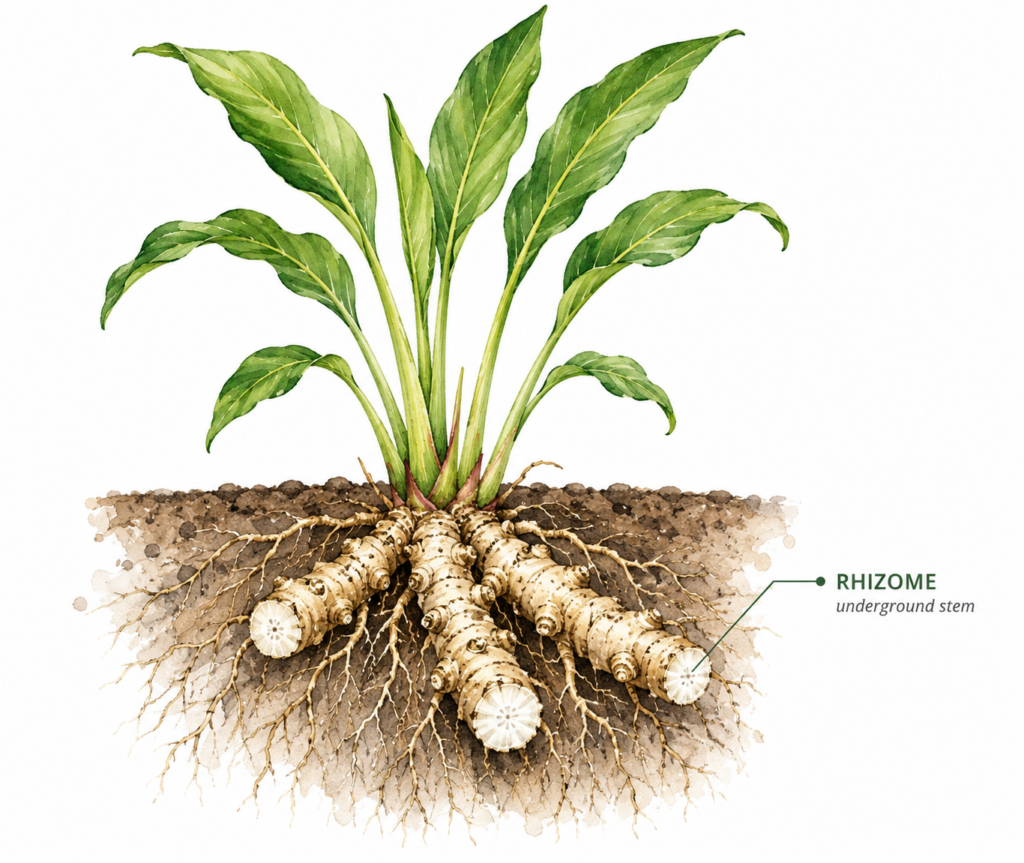
The silky white starch known as arrowroot comes from underground rhizomes of plants such as Maranta arundinacea.
And despite appearances, a rhizome is botanically an underground stem.
The starch inside can be separated, washed and dried into the wonderfully fine powder we know as arrowroot.
SoapMe uses organic arrowroot powder in our deodorants for its absorbency and soft, silky feel.
So that innocent white powder began underground…
inside a stem doing a remarkably good impression of a root.
See also: Deodorant · Natural · Organic

BAKING SODA
You probably know it from the kitchen.
Chemistry knows it as sodium bicarbonate.
Because baking soda is mildly alkaline, it can interact with acids and alter conditions in which certain odors develop.
That’s one reason this humble white powder found its way into natural deodorant formulations.
SoapMe uses non-aluminum baking soda in select deodorants.
Cookies. Cleaning. Deodorant.
Quite the résumé.
See also: Deodorant · Natural

BALANCE
Balance doesn’t necessarily mean equal amounts of everything.
Think about standing upright. Tiny adjustments keep everything working together.
A good formula can work the same way.
One ingredient may bring hardness. Another bubbles. Another richness, glide or softness.
They don’t need to do the same thing.
They need to work beautifully together.
That’s the little secret inside balance:
Balance isn’t sameness. It’s harmony.
See also: Fatty Acids · Lather
BEESWAX
A honeycomb is an architectural marvel.
Bees don’t find the wax. They make it.
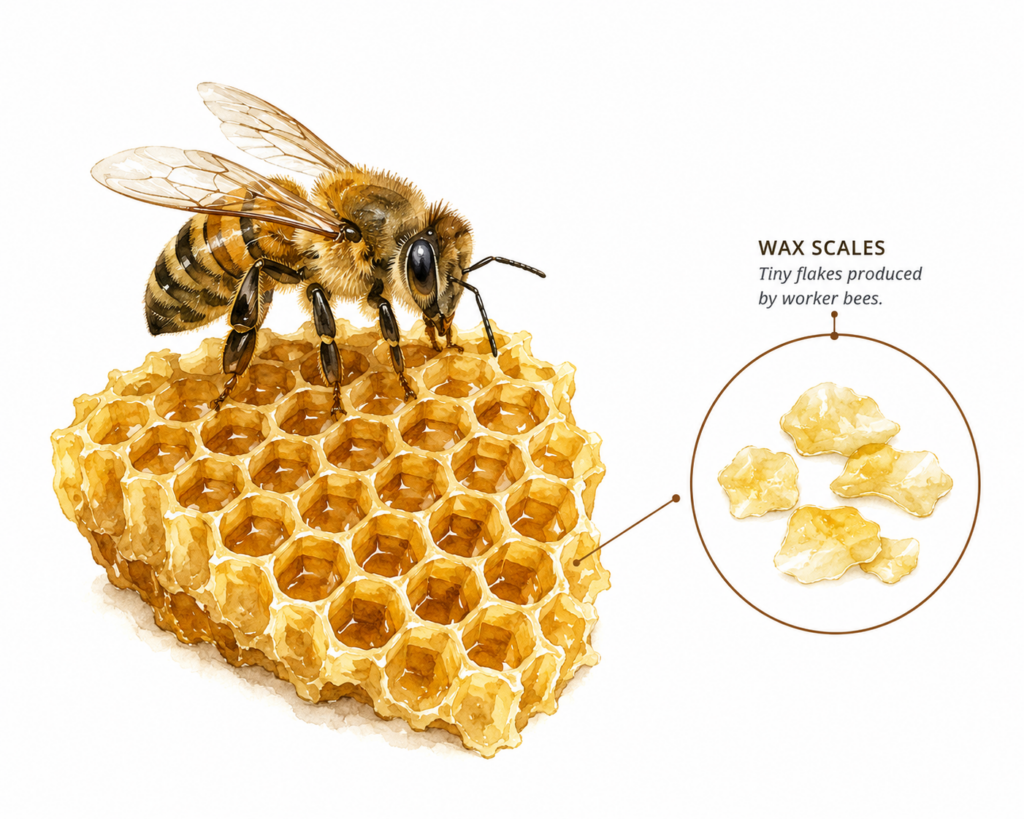
Worker honeybees produce tiny wax scales from specialized glands on the undersides of their bodies, then manipulate that wax to build honeycomb.
So when you hold beeswax, you’re holding something created by living creatures…
piece by tiny piece.
In body care, beeswax adds structure and can help slow moisture loss.
SoapMe uses locally sourced, raw, unrefined beeswax in select creations.
The bees did the remarkable part.
We get to make something lovely with it.
See also: Raw · Moisture Barrier · Handcrafted
BENTONITE CLAY
That soft, unassuming clay has a rather explosive family history.
Much bentonite forms when volcanic material—often ash—is altered by water over enormous stretches of time.
Certain bentonites have another fascinating ability: water can enter between microscopic layers in their mineral structure, causing the clay to swell.
So an ordinary scoop of bentonite can carry a story involving:
volcanoes + ash + water + minerals + time.
Not bad for a little gray powder.
See also: Natural
BODY
You have a remarkable body.
Through it, you can move, touch, create, smell a flower, feel warm water, hug somebody you love—or enjoy a really good shower.
Meanwhile, your body is quietly carrying out an astonishing number of physical processes on its own.
You can notice it.
Use it.
Enjoy it.
And choose how you care for it.
It’s yours to care for.
Might as well treat it nicely.
See also: Caring · Nourish · Nurturing

CARING
Caring isn’t an ingredient.
You won’t find it listed between coconut oil and shea butter.
You can’t weigh it on a scale, melt it in a pot or pour it into a mold.
And yet, care can influence every one of those things.
It’s choosing thoughtfully. Paying attention. Noticing when something isn’t quite right. Taking a little extra time because what you’re making—and the person who will eventually use it—matters.
That’s the interesting thing about care:
You can’t put it into a formula.
But somehow, you can put it into what you make.
See also: Handmade · Handcrafted · Loving · Small-Batch
CASTOR OIL
Castor oil is something of an oddball among plant oils.
That’s exactly what makes it interesting.
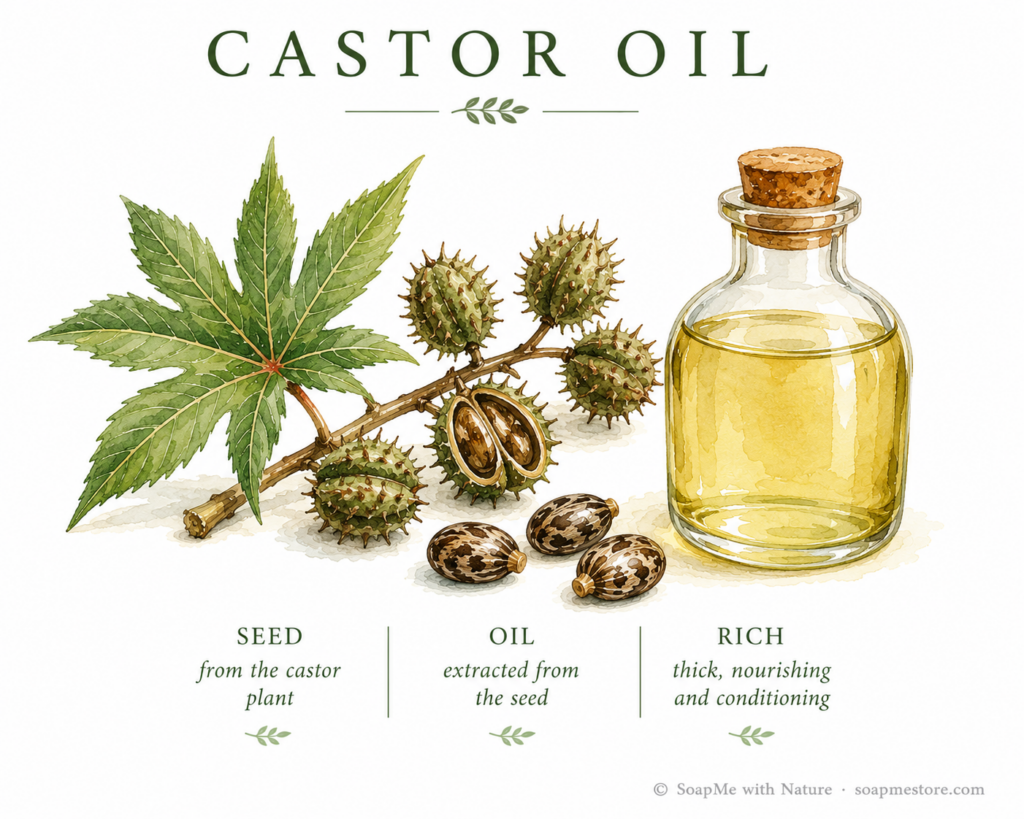
It’s pressed from the seeds of Ricinus communis, and its fatty-acid composition is dominated by ricinoleic acid, which helps give castor oil its famously thick character.
In handmade soap, that unusual chemistry becomes especially useful: castor oil can help support a rich, stable lather.
SoapMe uses organic, cold-pressed castor oil in select creations.
Sometimes being different is exactly the point.
See also: Ricinoleic Acid · Fatty Acids · Lather
COCONUT OIL
Have you ever seen coconut oil perfectly solid one day…
and completely liquid the next?
Nothing went wrong.
Its melting range sits close enough to ordinary room temperatures that a warm day can turn the same white solid into clear liquid oil.
You’re watching a phase change happen right in front of you.
That same fatty-acid composition also makes coconut oil especially useful in soapmaking, where it can contribute hardness, cleansing ability and bubbly lather.
SoapMe uses organic virgin coconut oil in many of our creations.
Same coconut oil.
Two completely different appearances.
Nature does enjoy a costume change.
See also: Virgin Coconut Oil · Fractionated Coconut Oil · Fatty Acids
CREATING
Before you create something…
it doesn’t exist yet.
First there’s an idea.
Then you decide to make it happen.
Choose. Measure. Mix. Pour. Whip. Cut. Adjust. Try again.
Knowledge, imagination, materials and action come together until something that once existed only as an idea becomes something another person can actually hold.
You imagined it.
You acted.
And now it exists.
See also: Handcrafted · Handmade · Passion
CREAMY
You know creamy when you feel it.
But what are you actually feeling?
A delicious combination of softness, smoothness, richness, glide and just the right amount of resistance.
That’s why texture matters.
A product isn’t experienced only through what it contains.
It’s also experienced through how it feels against you.
Silky balm. Dense creamy lather. Whipped tallow softening against warm skin.
And really…
some things just feel better creamy.
See also: Tactile · Lather · Whipped

DEODORANT
Deodorant and antiperspirant have different jobs.
Deodorant helps control unwanted odor and keep you feeling fresh. Antiperspirant is designed to reduce perspiration itself.
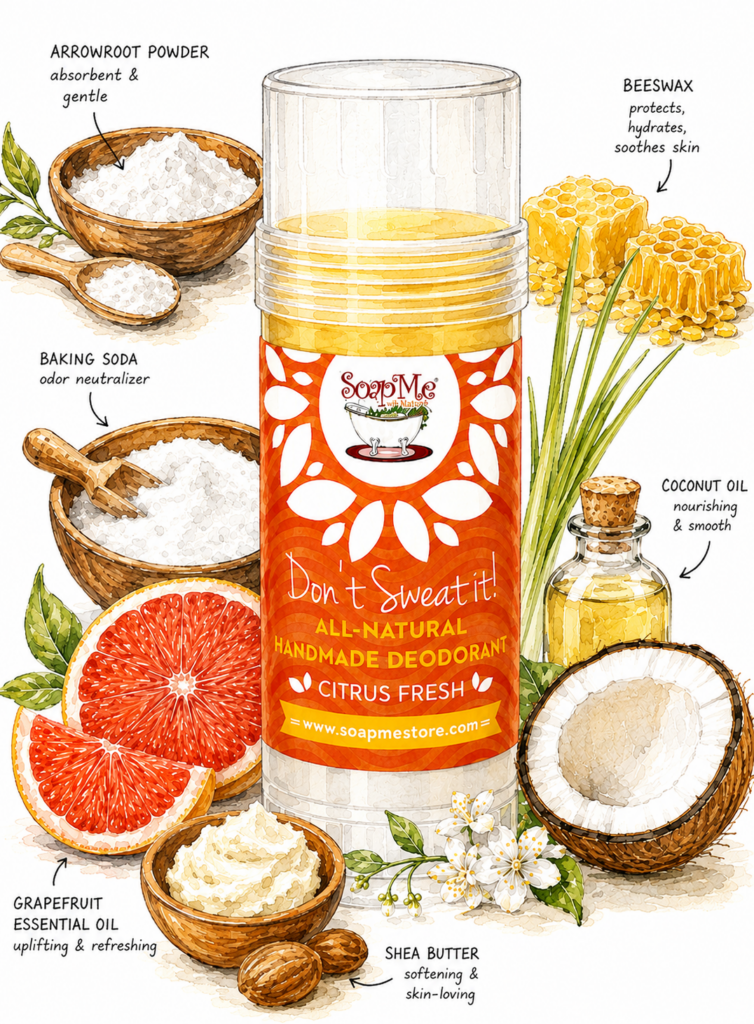
SoapMe makes natural deodorant, using thoughtfully chosen ingredients such as baking soda (vs. aluminum), arrowroot powder, coconut oil, shea butter, beeswax and essential oils.
Different approach.
Different purpose.
Fresh. Natural. Effective.
See also: Arrowroot Powder · Baking Soda · Coconut Oil
DRY SKIN
Oil and water aren’t interchangeable.
Water hydrates.
Oils, butters and waxes have different roles. Depending on the ingredient and formulation, they can soften skin and help slow water loss from its surface.
So when skin feels dry, another useful question besides “What can I put on it?” is:
“How can I help it hold onto moisture?”
That one distinction makes a surprising amount of skincare language easier to understand.
See also: Hydration · Moisture Barrier · Skin Barrier · Emollient

EMOLLIENT
An emollient helps skin feel softer and smoother.
Even better, its name gives us the clue. Emollient ultimately comes from Latin emollire:
to soften.
Many natural oils and butters have emollient properties.
So next time you see the word, just think:
Make it softer.
See also: Dry Skin · Shea Butter · Tallow
ESSENTIAL
The essential in essential oil doesn’t mean the oil is essential for survival.
It’s connected with essence—the characteristic nature or quality of something.
So lavender essential oil isn’t called essential because you simply cannot live without lavender.
Although after smelling a really beautiful one…
we understand the confusion.
See also: Essential Oils
ESSENTIAL OILS
Essential oils are concentrated mixtures of volatile aromatic compounds produced by plants.
Depending on the plant, those compounds may come from flowers, leaves, fruit peels, woods, resins or other plant parts.
One word worth knowing is volatile.
In everyday conversation, it can mean unpredictable.
Thankfully, your lavender isn’t having an emotional crisis.
In chemistry, volatile means a substance evaporates readily.
Those aromatic compounds leave the oil, move invisibly through the air…
and become something you experience as aroma.
Invisible.
Intangible.
Unmistakably there.
See also: Aroma · Olfactory · Scent
EXFOLIATE
There’s a leaf hiding inside exfoliate.
The word ultimately traces to Latin folium:
leaf.
It’s the same ancient root behind foliage. The word developed around the idea of shedding or coming away in layers—rather like leaves releasing from a plant.
In body care, physical exfoliation uses texture to help remove material, including dead cells, from the skin’s surface.
So tucked inside exfoliate is still that little image:
a leaf letting go.
See also: Exfoliation · Tactile
EXFOLIATION
Your skin already exfoliates.
Cells gradually move outward through the epidermis, and cells at the outer surface are eventually shed through a natural process called desquamation.
Physical exfoliation simply gives you a way to assist at the surface and enjoy that wonderfully smooth feeling afterward.
Your body was already doing the shedding.
We just brought the scrubby bits.
See also: Exfoliate · Tactile
EXHILARATION
That wonderful feeling of being awake, alive and ready to go.
Even the word has something cheerful hidden inside it.
Exhilaration traces back to Latin hilaris, meaning cheerful or merry.
And yes:
Exhilaration and hilarious are linguistic relatives.
Apparently feeling good runs in the family.
Cool water. Peppermint. A bright aroma. A shower you turn into something considerably more fun than simply getting clean.
See also: Invigorating · Peppermint · Pleasure · Tingly

FATTY ACIDS
The word fat sometimes gets an undeservedly dull reputation.
In body care and soapmaking, fatty acids are fascinating little building blocks.
Many fats and oils are made largely from triglycerides—molecules built from glycerol and three fatty acids.
Change the fatty acids, and you change the personality of the fat or oil.
Coconut oil behaves differently from olive oil.
Castor oil behaves differently from tallow.
Shea butter behaves differently from all three.
Why?
In large part because they contain different mixtures of fatty acids.
Once you know that, an ingredient list begins looking less like a list…
and more like chemistry with personalities.
See also: Castor Oil · Coconut Oil · Oleic Acid · Ricinoleic Acid · Shea Butter · Tallow
FRACTIONATED COCONUT OIL
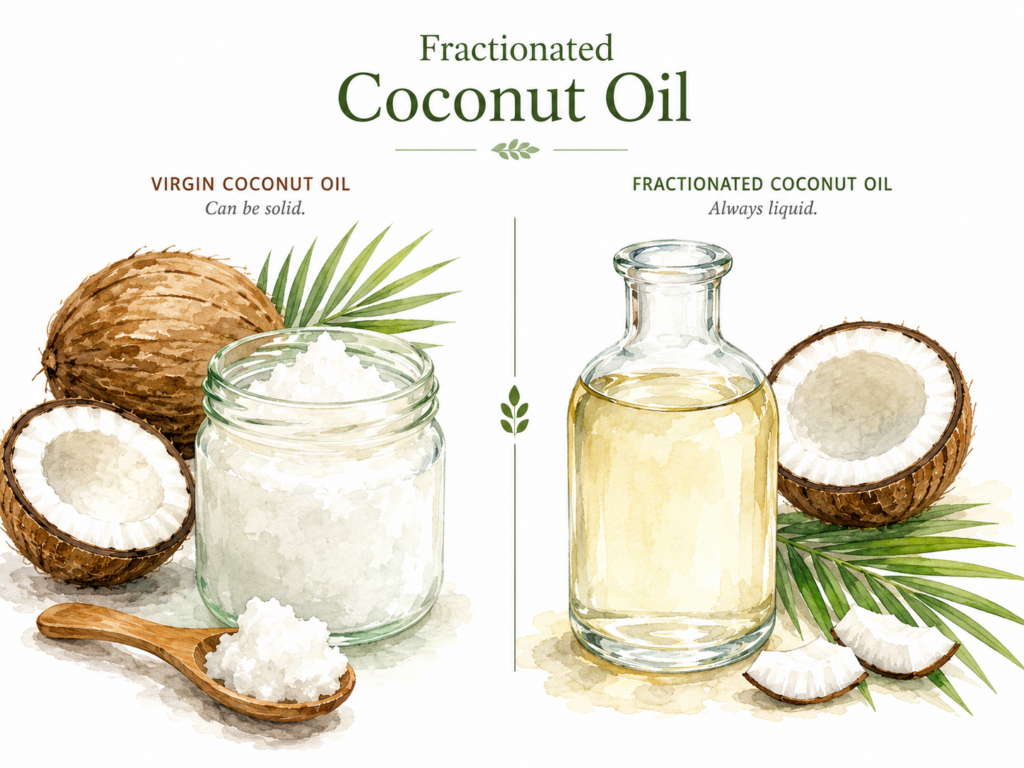
Coconut oil can turn solid.
Fractionated coconut oil stays liquid.
So what happened?
The clue is right in the name.
To fractionate means to separate something into portions—or fractions—based on differences in physical properties.
Separating portions of coconut oil with different melting characteristics can produce an oil that stays fluid at temperatures where ordinary virgin coconut oil would solidify.
Nothing mysterious happened.
We separated the crowd.
SoapMe uses wildcrafted fractionated coconut oil in select creations.
See also: Coconut Oil · Fatty Acids · Virgin Coconut Oil
FRESH
Cut a lemon.
Crush a mint leaf.
Step outside after rain.
You know fresh before anyone explains it.
Fresh can feel crisp, bright, lively and renewed.
Something fresh seems to announce:
Here I am.
Maybe that’s why fresh aromas are so enjoyable.
They don’t always whisper from across the room.
Sometimes they come over and introduce themselves.
See also: Aroma · Invigorating · Peppermint · Uplifting

GERANIUM
Never judge an aromatic plant by its flower.
The essential oil commonly called geranium oil is distilled largely from the fragrant green parts of Pelargonium plants—not simply squeezed from those pretty flowers.
Rub a scented geranium leaf between your fingers and the secret becomes obvious.
The greenery itself is wonderfully aromatic.
Depending on the plant and oil, the aroma may feel rosy, green, fresh and softly sweet.
The flower may catch your eye…
but the leaves have something to say.
See also: Aroma · Essential Oils · Scent
GLYCERIN
Soapmaking can create glycerin.
During saponification, fats or oils react with alkali. Their triglycerides are transformed: the fatty-acid portions become soap, while glycerol is released as glycerin.
So one transformation gives us:
SOAP + GLYCERIN
Glycerin is also a humectant, meaning it has an affinity for water.
Which means something rather lovely happens while soap is being made:
one of its useful companions is being made right alongside it.
See also: Humectant · Saponification · Soap

HANDCRAFTED
There’s more strength hiding inside craft than you might expect.
The word traces back to Old English cræft, which carried meanings including strength, power, skill and ability.
Over time, that sense developed toward something familiar today:
skill in making.
That’s what makes handcrafted different from simply made by hand.
Craft involves knowing your materials, understanding your process, noticing what’s happening and applying skill.
It’s knowledge…
put into your hands.
See also: Handmade · Creating · Small-Batch
HANDMADE
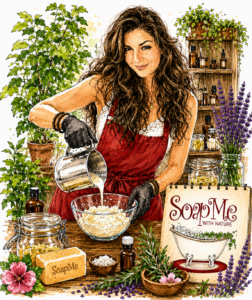
Technically, handmade means exactly what it looks like:
made by hand.
But those three words leave quite a lot out.
Hands measure.
Hands stir.
Hands pour.
Hands cut.
Hands fill.
Hands notice texture, consistency and the little details that don’t fit neatly onto an ingredient label.
And behind those hands is someone paying attention.
That’s part of what makes handmade personal.
Hands belong to someone.
And someone can care.
See also: Caring · Handcrafted · Small-Batch
HUMECTANT
It sounds more complicated than it is.
A humectant has an affinity for water and can help attract and retain it.
Glycerin is a familiar example.
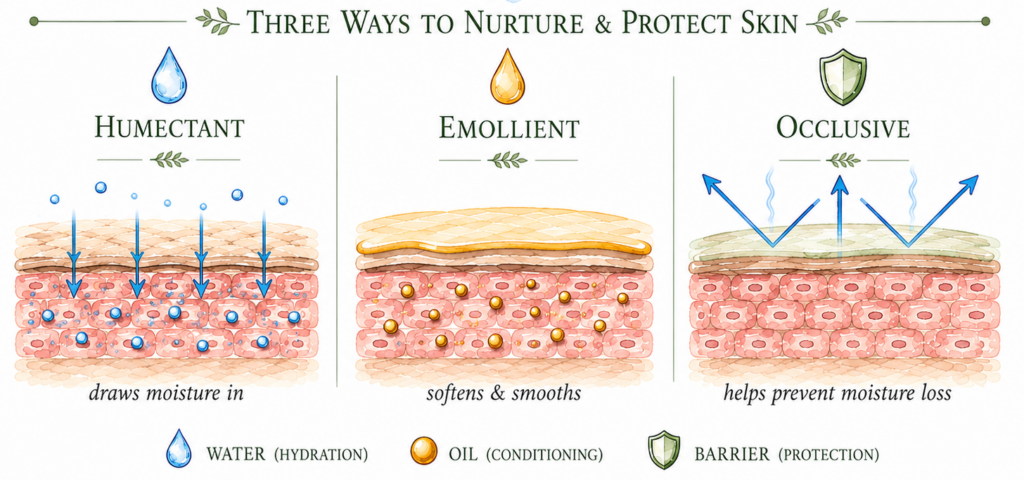
That makes humectants different from emollients, which soften and smooth, and occlusives, which help slow water loss.
Three words.
Three different jobs.
See also: Glycerin · Hydration · Occlusive
HYDRATION
Hydration is about water.
We sometimes use hydrating and moisturizing as though they’re exactly the same thing.
They’re not quite.
Hydration concerns water content.
Oils and butters don’t turn into water. Depending on the formulation, they can instead soften the skin or help reduce the rate at which water escapes.
Water matters.
Keeping it there matters too.
See also: Dry Skin · Humectant · Moisture Barrier

INDIAN HEALING CLAY
“Indian healing clay” is a familiar commercial description sometimes used for bentonite clay.
For LEARN, the more interesting part is what the material actually is.
Bentonite is a clay commonly rich in minerals of the smectite group and often formed through alteration of volcanic material.
Certain bentonites can take water between microscopic mineral layers and swell.
So beneath the familiar name is the more fascinating story:
volcanic material + water + minerals + time.
See also: Bentonite Clay
INGREDIENTS
An ingredient list can look like fine print.
Look closer, and it becomes considerably more interesting.
Every ingredient answers a question:
What is this made from?
And once you start following those answers, an ordinary list becomes a map.
Coconut → oil.
Shea fruit → kernel → butter.
Castor seed → oil.
Bee → wax.
Volcanic material → clay.
Animal fat → tallow.
Plants → aromatic oils.
An ingredient list isn’t merely what’s in something.
It’s also a trail showing you where it came from.
See also: Natural · Organic · Creating
INVIGORATING
There’s a wonderful word inside invigorating:
vigor.
Vigor carries old associations with liveliness, activity and strength.
That’s exactly the quality we’re describing when something feels invigorating.
Bright citrus.
Cool peppermint.
A crisp rinse.
You can choose something because you want the next moment to feel fresh, lively and awake.
Sometimes you don’t wait for the experience.
You create it.
See also: Exhilaration · Fresh · Peppermint · Uplifting
IRRESISTIBLE
Break the word apart and you get the idea:
ir + resist + ible
Not able to be resisted.
Of course, when SoapMe calls an aroma irresistible, we’re having a little fun.
You haven’t lost your powers of decision.
You smell it.
Lean in for another sniff.
And decide…
Oh yes. I definitely want more of that.
That’s our kind of irresistible.
See also: Aroma · Pleasure · Scent

JOY
Joy isn’t something we can put into a soap formula.
Coconut oil? Yes.
Shea butter? Absolutely.
Essential oils? Certainly.
Joy?
Doesn’t come by the pound.
But you can create experiences that invite it.
An aroma you adore. Warm water. Creamy lather. Something beautiful someone cared enough to make well.
Those things aren’t joy themselves.
They’re ingredients of a different sort.
You bring the joy. We make the soap.
See also: Pleasure · Caring · Aroma

LATHER
Lather happens when soap, water and air get together—and you give them a little help.
Rub a wet bar between your hands and you’re spreading soap through water while incorporating air, creating many bubbles separated by thin liquid films.
That whole bubbly, creamy structure is lather.
The bubbles aren’t the soap.
Soap molecules help stabilize the films around those pockets of air. Different oils can also change the character of the lather—some encouraging bigger bubbles, others helping create a richer, creamier feel.
So lather isn’t simply a handful of suds.
It’s something you create from:
soap + water + air + movement.
See also: Soap · Castor Oil · Coconut Oil
LAVENDER
Lavender doesn’t keep all of its aroma in its flowers.
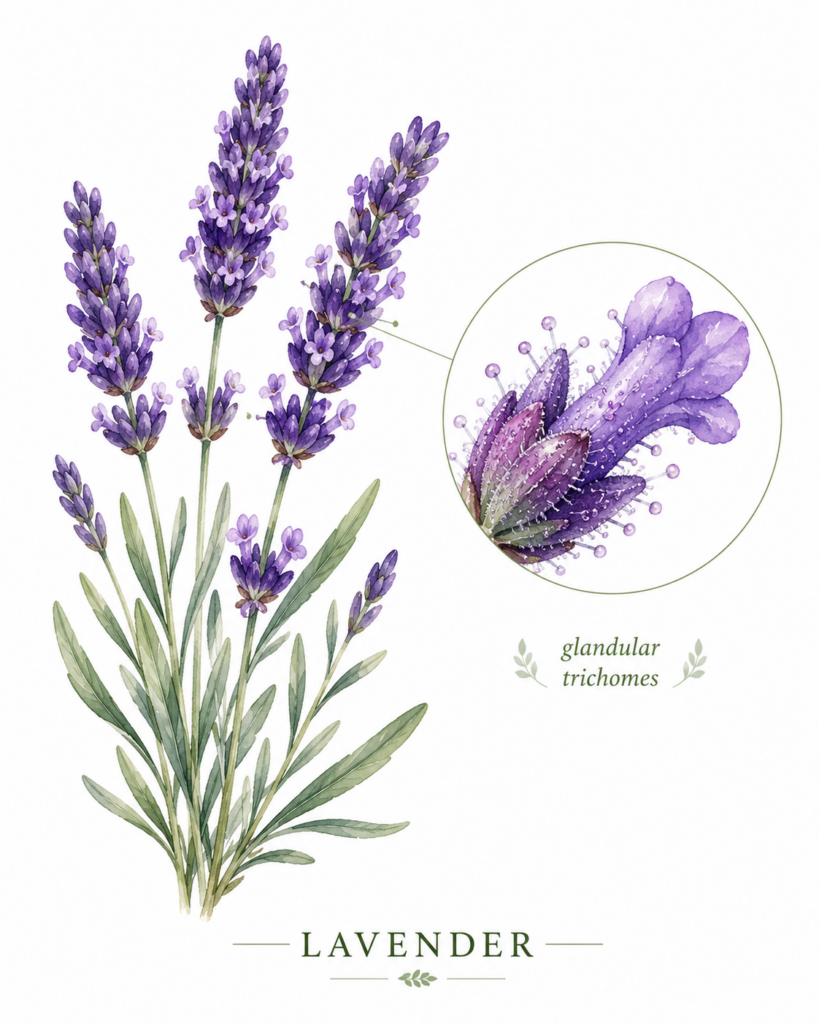
On the plant’s surface are tiny specialized structures called glandular trichomes that produce and hold aromatic compounds.
They’re so small that you can hold a sprig of lavender in your hand without ever noticing them.
Rub the plant…
and suddenly:
lavender.
A remarkable amount of aromatic character hiding in structures you can barely see.
See also: Aroma · Essential Oils · Soothing
LEMONGRASS
Lemongrass looks like grass.
Then you crush it.
And suddenly:
LEMON.
Yet there isn’t a lemon anywhere in sight.
That bright citrus character comes largely from citral, a mixture of aromatic compounds that also contributes lemon-like aromas elsewhere in nature.
Two plants can look completely unrelated…
and share aromatic chemistry your nose immediately recognizes.
So yes, lemongrass really does smell lemony.
The lemon just isn’t invited.
See also: Aroma · Essential Oils · Uplifting
LOVING
Love isn’t an ingredient either.
We’re developing quite a collection of things that don’t fit on ingredient labels.
But love can influence why and how something is made.
Attention.
Patience.
Thought.
Care.
Not something syrupy. Not something printed on a package because it sounds nice.
Care put into action.
You can’t weigh it.
But you can certainly recognize it.
See also: Caring · Nurturing · Handmade

MOISTURE BARRIER
Imagine filling a container with water…
only to discover that it doesn’t hold onto the water very well.
Adding more helps temporarily.
But there’s another question:
How well is it being kept in?
Your skin’s outer barrier plays an important role in slowing the loss of water from the body into the surrounding environment.
That’s why caring for dry-feeling skin isn’t always just about adding something onto the surface.
Sometimes it’s also about supporting the barrier that helps keep water in.
Once you understand that, quite a lot of skincare language starts making more sense.
See also: Hydration · Dry Skin · Skin Barrier
MOISTURIZE
Moisturizing isn’t one single trick.
Different ingredients can do different jobs:
Humectants interact with water.
Emollients help soften and smooth.
Occlusives help slow water loss.
And one formulation can use more than one approach.
So moisturizing isn’t necessarily one ingredient doing everything.
Think of it more as a little team effort.
See also: Humectant · Emollient · Occlusive
MINT
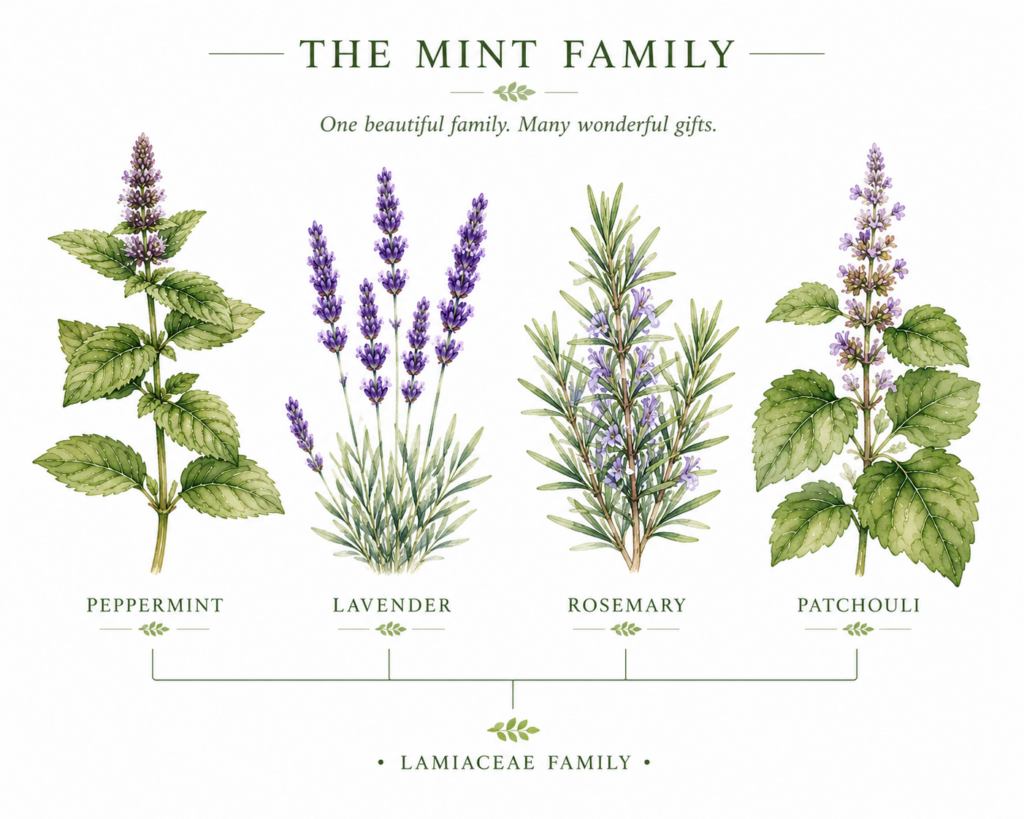
Mint is a whole family affair.
The botanical family Lamiaceae includes peppermint, spearmint, lavender, rosemary, patchouli and many other aromatic plants.
Yes.
Lavender and patchouli are relatives of mint.
They certainly don’t smell alike.
That’s because botanical families aren’t organized according to whether plants happen to smell similar to us.
So peppermint, rosemary, lavender and patchouli can all attend the same botanical family reunion…
with completely different personalities.
Families are funny that way.
See also: Patchouli · Peppermint · Spearmint

NATURAL
Natural sounds like it should have one perfectly obvious definition.
It doesn’t.
In everyday use, it generally suggests something that comes from nature. In cosmetics, however, the word can be much less precise than many people realize.
Which gives you a more interesting thing to do than simply admire the word on the front:
Look closer.
What’s actually in it?
Plant oils. Butters. Clay. Beeswax. Essential oils. Tallow. Herbs.
Natural doesn’t have to end the conversation.
It can be where the conversation begins.
See also: Ingredients · Organic · Nontoxic
NONTOXIC
Toxic has a surprisingly dramatic history.
The word ultimately traces through Greek toxikon, associated with poison used on arrows.
Over time, toxic broadened to describe poisonous or harmful substances more generally.
But toxicity isn’t always a simple yes-or-no property.
The substance matters.
The amount matters.
The way you’re exposed to it matters.
So an unfamiliar chemical name doesn’t automatically tell you whether something is good or bad.
After all:
Everything is chemistry.
A better place to begin is with curiosity:
What is it? Why is it here? How is it being used?
See also: Ingredients · Natural
NOURISH
Nourish and nutrition are relatives.
Both ultimately trace back to Latin nutrire:
to feed, foster or support.
That’s why nourish can mean considerably more than supplying food.
You can nourish a plant.
A friendship.
An idea.
A talent.
And you can choose how you care for the body you have.
To admire something is wonderful.
To nourish it goes one step further:
You actively give it care.
See also: Nurturing · Caring · Body
NURTURING
Nurture and nourish come from the same old family of ideas about feeding, fostering and helping something develop.
But nurturing feels especially active.
To nurture something, you don’t simply notice it.
You participate in its care.
You give attention.
Provide what you believe will help.
Protect what’s worthwhile.
Keep showing up.
Underneath all the creams, aromas and beautiful textures is a very simple decision:
This is mine to care for.
See also: Nourish · Caring · Loving

OCCLUSIVE
It sounds complicated.
The idea isn’t.
An occlusive helps form a layer on the skin that slows the escape of water.
Think of putting a lid over something to help keep moisture from disappearing as quickly.
And now three easily confused skincare words become much simpler:
HUMECTANT — interacts with water.
EMOLLIENT — softens and smooths.
OCCLUSIVE — helps slow water loss.
Different jobs.
Often working together.
Once you know the difference, quite a bit of skincare language suddenly becomes less mysterious.
See also: Humectant · Emollient · Moisturize
OLEIC ACID
Oleic acid sounds like something somebody might add to an oil.
Often, it’s already part of the oil.
It’s a naturally occurring fatty acid found in many fats and oils and is especially abundant in olive oil.
Even its name gives us a clue. Oleic is connected with Latin oleum:
oil.
And there’s the useful realization:
A scientific-sounding name doesn’t necessarily mean a mysterious synthetic additive.
Sometimes it’s simply the name of one of the molecules already present in a familiar natural ingredient.
See also: Olive Oil · Fatty Acids · Tallow
OLFACTORY
Olfactory simply means:
related to the sense of smell.
Your body’s olfactory system gives you a physical way to perceive aromatic molecules.
But what arrives through that doorway becomes your experience.
Lavender.
Peppermint.
Patchouli.
Familiar. Strange. Beautiful. Earthy. Irresistible.
Your body provides the sensory equipment.
You experience what arrives.
See also: Aroma · Scent · Essential Oils
OLIVE OIL
An olive doesn’t look particularly oily.
But the oil is hiding inside the fleshy fruit.
That’s interesting because many familiar plant oils come primarily from seeds or nuts.
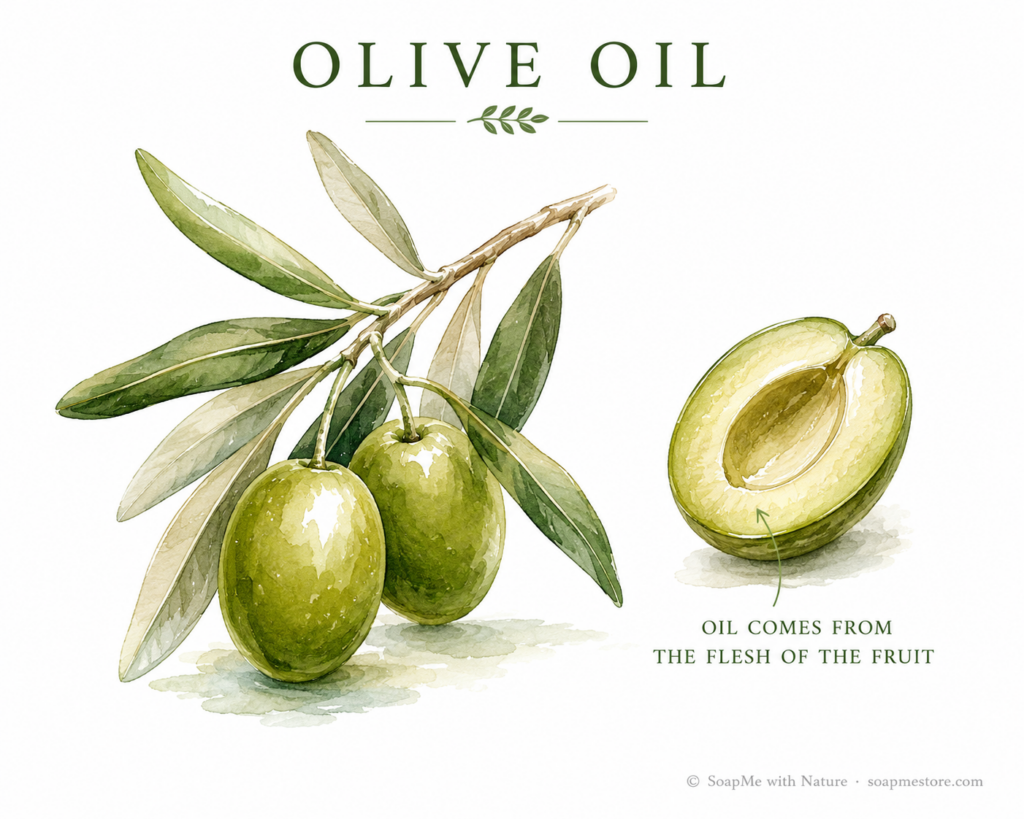
Crush olives and their cells release tiny droplets of oil that can be separated from the fruit’s water and solids.
Olive oil is especially rich in oleic acid and has been treasured in soapmaking for centuries.
And then comes the transformation:
fruit → oil → soap → lather
Quite a journey for an olive.
See also: Oleic Acid · Fatty Acids · Soap
ORGANIC
Organic is one of those words with more than one life.
In chemistry, organic refers broadly to a huge family of carbon-containing compounds.
In agriculture and product labeling, organic has a different and much more specific meaning involving how agricultural ingredients are grown, handled and certified.
Same word.
Different conversation.
Natural and organic aren’t synonyms.
Something can come from nature without being certified organic.
So when LEARN identifies a SoapMe ingredient as organic, we’re telling you something specific about that ingredient’s sourcing—not using organic as another word for natural.
See also: Natural · Ingredients

PALM OIL
Palm oil comes from a fruit.
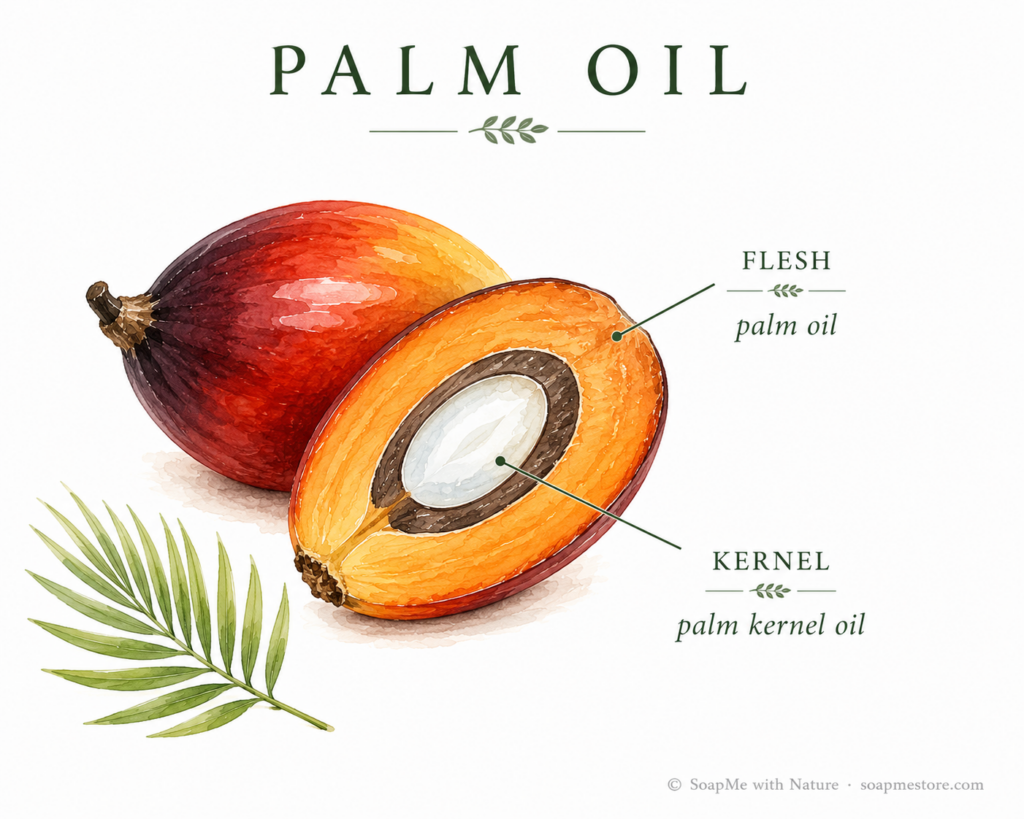
Oil palms produce large bunches of reddish-orange fruits.
Palm oil comes from the fleshy part of the fruit.
Palm kernel oil is different—it comes from the kernel inside.
Same fruit.
Two different oils.
In soapmaking, palm oil can contribute hardness and a stable, creamy lather.
SoapMe uses sustainably sourced palm oil.
One fruit. Two oils.
And a good reminder that understanding an ingredient sometimes begins simply by asking:
Where did this come from?
See also: Sustainable · Fatty Acids · Lather
PASSION
Passion becomes particularly interesting when you do something with it.
You can love an idea and leave it sitting quietly in your imagination.
Or you can learn.
Experiment.
Try again.
Improve.
Pay attention to the detail someone else might call good enough.
A feeling becomes intention.
Intention becomes action.
And sometimes that action becomes something another person can actually hold in their hands.
That’s passion becoming creation.
See also: Creating · Handcrafted · Caring
PATCHOULI
Patchouli has a surprise in its family tree.
That deep, earthy plant is a member of the mint family.
Yes.
Patchouli and peppermint are botanical relatives.
They certainly don’t smell like it.
Even the name patchouli takes us back to something wonderfully simple: it entered English through South Asian usage associated with Tamil words for green and leaf.
Green leaf.
Such an uncomplicated name for such an unmistakable aroma.
Earthy. Deep. Warm. Rich.
Apparently one green leaf can have quite a personality.
See also: Mint · Essential Oils · Aroma · Scent
PEPPERMINT
Peppermint can make your skin feel cool…
even when the peppermint itself isn’t cold.
How?
Menthol.
Menthol can activate temperature-sensitive receptors involved in sensing coolness.
So that unmistakable peppermint:
Oooooh…
is chemistry becoming sensation.
And peppermint has another surprise: it’s a natural hybrid derived from watermint and spearmint.
Two mint parents.
One very lively child.
See also: Tingly · Invigorating · Spearmint · Mint
PLEASURE
Pleasure doesn’t always have to arrive as some enormous event.
Sometimes you make it out of ordinary things.
Warm water.
An aroma you love.
Creamy lather.
Something wonderful against your skin.
A few uninterrupted minutes you deliberately made your own.
You chose it.
You created the moment.
That’s one of the loveliest things about simple pleasures:
You don’t always have to wait for them to happen.
See also: Joy · Tactile · Aroma · Lather
PURE
Pure sounds wonderfully simple.
But there’s an interesting question hiding behind it:
Pure—in what sense?
In chemistry, purity can describe composition very specifically.
In everyday body-care language, pure is often used more loosely to suggest simplicity or freedom from unwanted additions.
So rather than letting one beautiful word do all the talking…
look at what’s actually there.
There’s an appealingly simple idea inside purity:
Keep the good things in. Leave the unnecessary things out.
See also: Ingredients · Natural · Nontoxic

RAW
Does raw mean completely untouched?
Usually not.
Raw shea butter still had to travel from fruit on a tree to butter you can scoop from a container.
Beeswax had to leave the honeycomb.
Ingredients may be separated, cleaned, filtered, dried or otherwise prepared.
So raw generally points toward less refining or processing—but exactly what that means depends on the ingredient.
Which gives us a more interesting question than simply:
Is it raw?
What happened to it before it got here?
Now we’re learning something.
See also: Shea Butter · Beeswax · Natural
RELAX
Look closely at the word relax and there’s an old idea of loosening inside it.
That’s a lovely way to think about relaxation.
Turn down the noise.
Run the water.
Choose an aroma you love.
Give yourself a few quiet minutes.
The whole world doesn’t have to become peaceful before you can make one little corner of it quieter.
You can create the conditions for your own moment of calm.
See also: Soothing · Unwind · Pleasure
RELIEF
Relief is often easiest to recognize because of what came immediately before it.
Tension…
then release.
A long day…
then the door closes.
Warmth…
then cool water.
Relief lives in that wonderful little transition from:
this…
to:
ahhh.
And sometimes you can create the change yourself.
See also: Relax · Soothing · Tingly
RICINOLEIC ACID
Another scientific-sounding name is hiding inside something familiar:
castor oil.
Most of castor oil’s fatty-acid content is ricinoleic acid, and that unusual composition helps explain some of castor oil’s distinctive properties.
We aren’t sprinkling mysterious “ricinoleic acid” into castor oil.
It’s naturally part of what castor oil is made from.
And there’s the realization:
Sometimes the unfamiliar name isn’t another ingredient at all.
It’s something already inside the ingredient you recognize.
See also: Castor Oil · Fatty Acids · Lather
ROSEMARY
There’s a Mediterranean picture hiding inside the name rosemary.
The name has long been associated with Latin ros marinus:
dew of the sea.
Rub one of rosemary’s narrow leaves between your fingers and its crisp, green, resinous aroma immediately announces itself.
So tucked inside that everyday herb is a rather beautiful image:
green leaves, sunshine and the sea.
See also: Mint · Essential Oils · Aroma

SAPONIFICATION
It sounds intimidating.
Saponification.
But the idea behind it is one of soapmaking’s great transformations.
Fats and oils react with an alkali under the right conditions, and their molecules are chemically rearranged.
The result includes:
SOAP + GLYCERIN
Not oil with some soap mixed into it.
Something new has been made.
Even the name gives away the secret. Saponification comes through Latin sapo:
soap.
So beneath that impressive-looking word is a wonderfully simple idea:
the making of soap.
See also: Soap · Glycerin · Fatty Acids
SCENT
Scent is invisible.
And yet you know when it arrives.
You can’t see lavender floating toward you.
You can’t hold the aroma of tangerine between your fingers.
But aromatic molecules move through the air, your body gives you the ability to perceive them…
and you experience scent.
Fresh.
Earthy.
Floral.
Woodsy.
Bright.
Soft.
Something invisible can become a very real part of an experience you choose to create.
See also: Aroma · Olfactory · Essential Oils
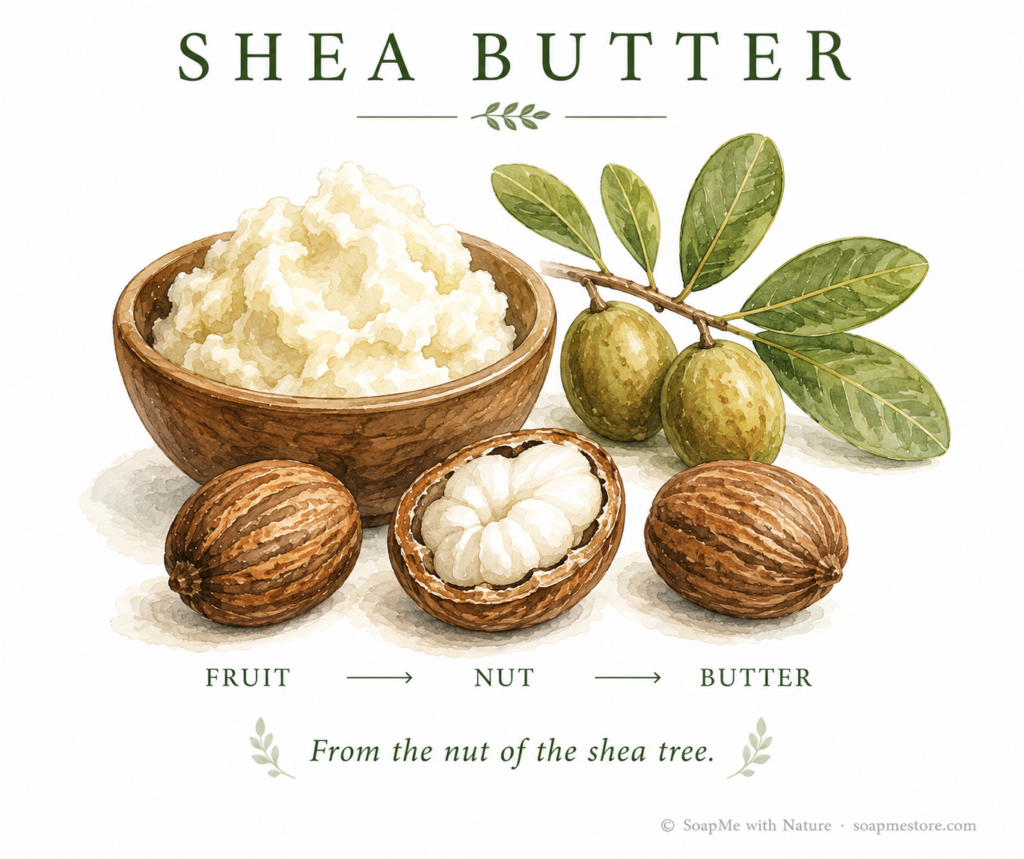
SHEA BUTTER
That creamy butter began somewhere unexpected:
inside the fruit of a tree.
Shea trees produce fleshy fruits containing nuts. Inside those nuts are kernels rich in the fats from which shea butter is made.
Fruit → nut → kernel → butter.
And shea trees aren’t in a hurry. They take years to mature before producing significant fruit and may continue producing for generations.
So a little scoop of shea butter carries a much longer story than its appearance suggests:
tree + fruit + nut + human hands + time.
See also: Raw · Fatty Acids · Nourish
SKIN BARRIER
The outermost layer of your skin is sometimes explained with a surprisingly useful picture:
bricks and mortar.
The flattened skin cells are the bricks.
Lipids—including ceramides, cholesterol and fatty acids—help form the mortar around them.
Together, this structure helps slow water loss while contributing to your body’s protective outer boundary.
Your body already handles an extraordinary amount of physical work.
Your part is choosing how you care for it.
See also: Hydration · Moisture Barrier · Fatty Acids
SMALL-BATCH
Small-batch isn’t simply a cute way of saying:
we don’t make very much at once.
Working in manageable quantities lets the maker stay close to what’s being made.
Measure.
Mix.
Watch.
Pour.
Fill.
Cut.
Inspect.
At SoapMe, small-batch keeps us close to what we’re creating.
Some things are simply better when they’re made a little at a time—with more hands-on attention, more personal care and a little more love in every batch.
See also: Handmade · Handcrafted · Caring · Loving
SOAP
Soap does something rather clever.
A soap molecule has a kind of two-sided personality.
One part interacts readily with water.
Another has an affinity for oily substances.
That allows groups of soap molecules to surround oily material and help disperse it into water so it can be rinsed away.
So soap doesn’t simply cover dirt with bubbles.
It helps something that doesn’t naturally mix well with water…
become considerably more willing to leave with it.
See also: Saponification · Lather · Glycerin
SOOTHING
There’s a lovely history hiding inside soothe.
The word is historically connected with Old English ideas around truth and affirming something as true.
Over time, those meanings traveled toward reassurance, comfort and calming.
Truth…
reassurance…
comfort…
soothing.
Apparently even words can soften with time.
See also: Relax · Relief · Lavender
SPEARMINT
Spearmint and peppermint are close relatives.
But they aren’t twins.
Peppermint’s menthol contributes strongly to its familiar cooling character.
Spearmint typically contains much less menthol, while carvone plays a major role in its sweeter, unmistakably spearminty aroma.
Same family.
Different chemistry.
Different personalities.
See also: Peppermint · Mint · Aroma
SUSTAINABLE
At the heart of sustainable is a wonderfully practical question:
Can this continue?
Sustainability asks us to look beyond the finished object—to the resources, ecosystems, communities and people involved in producing what we use.
Not only:
What did it take to make this?
But:
Can it continue responsibly?
A small word with a rather long view.
See also: Palm Oil · Natural

TACTILE
Tactile comes from Latin tangere:
to touch.
And body care is wonderfully tactile.
Smooth balm.
An exfoliating seed.
Creamy lather.
Whipped tallow softening against warm skin.
We spend plenty of time talking about what products contain.
Sometimes it’s nice simply to notice what they feel like.
Touch is one of the ways you explore the physical world through the body you have.
And some things…
are simply lovely to touch.
See also: Creamy · Lather · Whipped
TALLOW
Tallow isn’t new.
Our rediscovery of it is.
People have rendered animal fats for generations for cooking, candles, soapmaking and preparations used on the skin.
Rendering separates usable fat from other tissue and moisture, producing the purified fat we call tallow.
Beef tallow naturally contains fatty acids including oleic, stearic and palmitic acids.
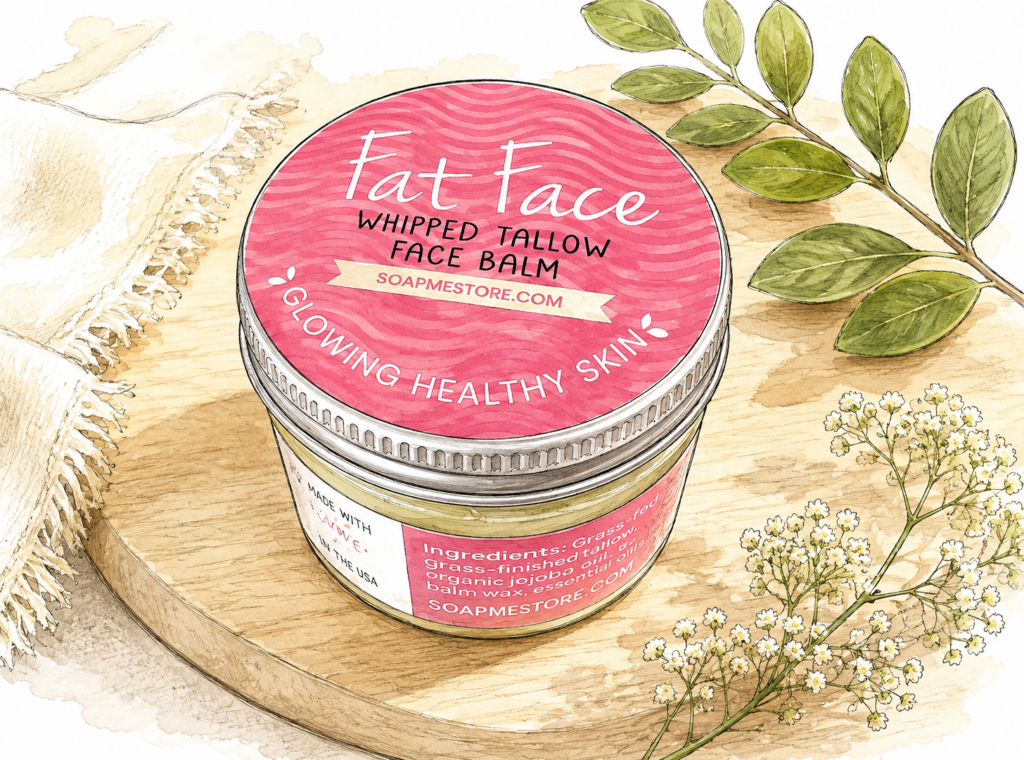
SoapMe uses organic, grass-fed and grass-finished beef tallow in our Fat Face Whipped Tallow Cream.
Perhaps that’s the interesting thing about tallow:
It didn’t suddenly become useful because somebody recently made it fashionable.
We simply remembered it.
See also: Fatty Acids · Whipped
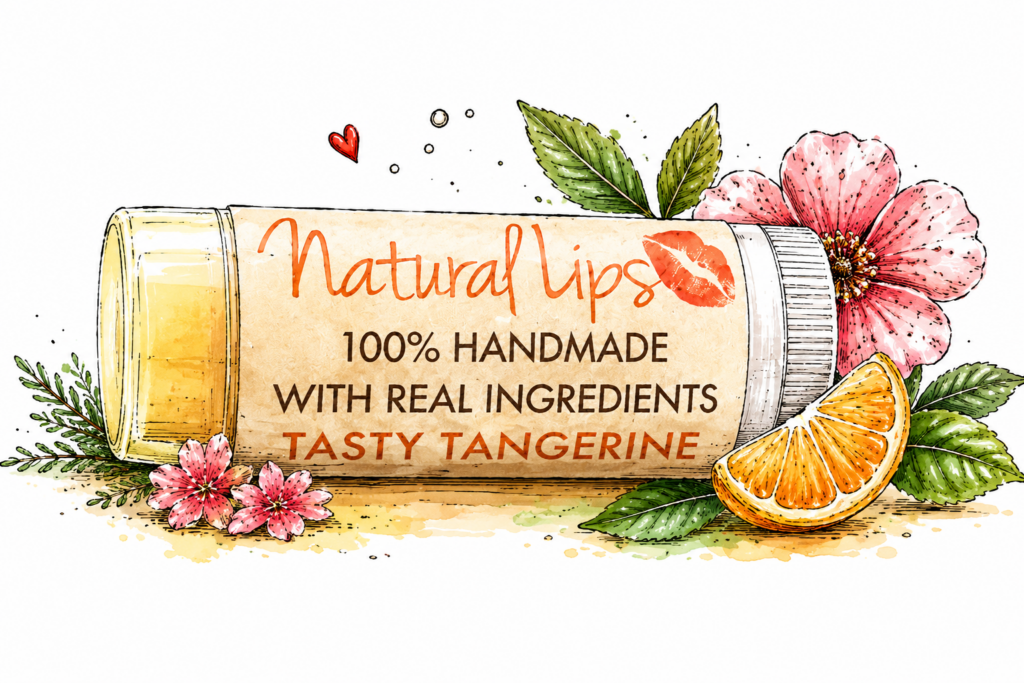
TANGERINE
There’s a city hiding inside tangerine.
The name became associated with Tangier, Morocco, through the trade in mandarins shipped from that port.
And the fruit has another little surprise.
Much of its characteristic aroma is concentrated in tiny oil glands in the outer peel.
Bend a fresh piece of peel in bright light and you may actually see a tiny mist burst outward.
Two discoveries in one:
Tangier gave it a name.
The peel gives it its perfume.
See also: Essential Oils · Aroma · Olfactory
TRY IT: Bend a piece of fresh tangerine peel with the colored side facing away from you and watch closely in bright light.
THERAPEUTIC
There’s an old idea of care inside therapeutic.
The word traces through Greek therapeia, associated with attendance, care and service.
Today, therapeutic can also have specific medical meanings, so it’s a word worth using thoughtfully.
But that older idea is rather beautiful:
to attend to something with care.
Take time.
Pay attention.
Choose thoughtfully.
Sometimes an ordinary act becomes something more because of the attention you bring to it.
See also: Caring · Nurturing
TINGLY
Tingly hardly needs defining.
You know it when it arrives.
Peppermint’s menthol can interact with temperature-sensitive receptors associated with coolness.
Your skin doesn’t have to become dramatically colder for you to experience that unmistakable:
Oooooh.
Fresh.
Lively.
Tingly.
Sometimes chemistry knows how to make an entrance.
See also: Peppermint · Invigorating · Exhilaration

UNWIND
Think about the word literally.
Something wound tightly can be un-wound.
Loosened.
Released.
Allowed to open again.
You can turn down the noise.
Run warm water.
Choose an aroma you love.
Give yourself a few quiet minutes.
You don’t have to wait for the entire world to become peaceful.
You can create a peaceful moment within it.
See also: Relax · Soothing · Pleasure

UPLIFTING
To uplift is literally to lift upward.
And sometimes an aroma seems to do something rather like that to an experience.
Bright citrus.
Fresh herbs.
Something crisp and lively that you choose because you enjoy what it brings to the moment.
You don’t need to transform your entire day.
Sometimes you can simply make the next five minutes…
brighter than the five before them.
See also: Fresh · Invigorating · Zesty

VIRGIN COCONUT OIL
Let’s clear something up right away.
The virgin in virgin coconut oil has nothing to do with the coconut’s romantic history.
It describes how the oil was produced.
Virgin coconut oil is made without the intensive refining, bleaching and deodorizing associated with highly refined coconut oil.
And it still performs coconut oil’s favorite little trick:
White and solid when cooler.
Clear and liquid when warmer.
Same oil.
No identity crisis whatsoever.
SoapMe uses organic virgin coconut oil in many of our creations.
See also: Coconut Oil · Fractionated Coconut Oil
VITAMIN E
Vitamin E isn’t one single substance.
It’s actually the name for a family of related fat-soluble compounds, including tocopherols and tocotrienols.
Different members of that family occur naturally in plant oils, nuts, seeds and other sources.
Vitamin E compounds can also function as antioxidants, helping interrupt certain oxidation reactions.
So when you see the familiar little words Vitamin E, you’re actually looking at a family name.
One vitamin.
Several relatives.
See also: Antioxidants

WHIPPED
What turns something dense and rich into something light, fluffy and almost cloud-like?
Sometimes the answer is wonderfully simple:
Air.
Whipping incorporates countless tiny pockets of air throughout a mixture.
Those pockets change its volume, texture and the way it feels when you scoop and spread it.
The ingredients haven’t suddenly become weightless.
We’ve changed their physical arrangement.
SoapMe’s Fat Face Tallow Cream is whipped for exactly that lovely transformation.
Same beautiful ingredients.
A little more air.
A lot more fluff.
See also: Tallow · Tactile · Creamy
WHOLESOME
There’s a whole hiding inside wholesome.
And that’s not an accident.
Historically, wholesome is related to ideas of being sound, healthy or conducive to well-being—from the same family of words as whole.
Over time, it also came to carry the feeling of something good, genuine and decent.
But let’s clear up one thing:
Wholesome does not mean boring.
Something can be wholesome…
and playful.
Natural…
and beautiful.
Innocent…
and just a little flirty. 
We see no contradiction whatsoever.
See also: Natural · Pleasure · Pure

YLANG YLANG
First things first:
ee-LANG ee-LANG.
Now you can say it.
Ylang ylang essential oil comes from the extraordinarily fragrant flowers of Cananga odorata, a tropical tree native to parts of Southeast Asia.
The flowers have long, narrow, curling petals, often yellow-green.
They aren’t necessarily the showiest flowers in the garden.
Then you smell one.
Rich.
Sweet.
Floral.
Exotic.
And suddenly you’re reminded:
Beauty doesn’t always announce itself with appearances.
Sometimes you have to get a little closer.
See also: Essential Oils · Aroma · Scent

ZESTY
Here’s a word that made the leap from fruit peel to personality.
Zest originally referred to the flavorful outer peel of citrus fruit—the very place where many of its aromatic oils are concentrated.
Eventually, people borrowed the word for something less tangible:
energy, enthusiasm, relish, gusto.
And really…
that makes perfect sense.
Bend a piece of fresh citrus peel and release that bright burst of aromatic oil.
It’s lively.
Bright.
Almost enthusiastic.
Somewhere along the way, we apparently decided a person could have that quality too.
A little zest looks good on everybody.
See also: Tangerine · Uplifting · Fresh